What comes next for Gwalia House? Iconic Lismore home under review

Dylan Butcher
14 January 2026, 6:51 PM
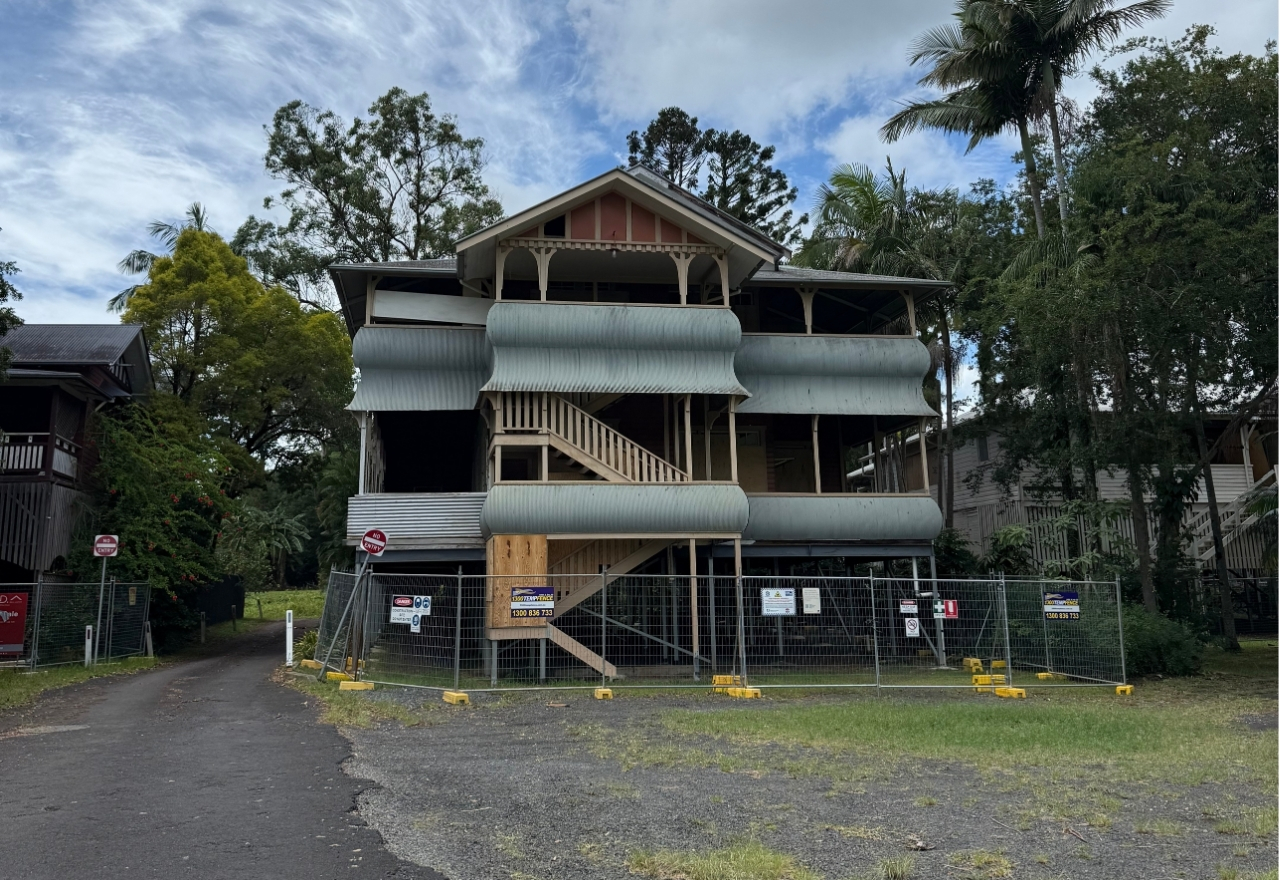
One of Lismore’s most recognisable heritage homes has entered a period of uncertainty, with its future still under assessment after being purchased under the NSW Government’s Resilient Homes Program.
The large residence at 7 Coleman Street, widely known as Gwalia House, has stood prominently in the St Andrew’s Heritage Precinct for more than a century. Built in the 1920s, the three-storey home has long drawn attention for its large street presence and layers of local history.
Since its flood buyback, speculation has grown about whether the house will be demolished, relocated, or preserved in some form, prompting renewed interest from the community.
For Carol Evans, who owned the property for nearly four decades, the conversation is deeply personal. She and her husband purchased the house in 1984 for around $44,000, after spotting it passed in at auction.
“My husband was a bit of a carpenter and we thought we’d just buy an old house and fix it up,” Ms Evans said. “We didn’t set out to do anything grand, we just wanted to restore it and make it liveable again.”
At the time, the house was in poor condition, having previously operated as a boarding house. Over the years, the Evans’ undertook ongoing restoration work, carefully retaining original features such as timber doors, sash windows, iron detailing and high ceilings. The building was eventually divided into several flats, but its architectural character remained largely intact.
“All the original features are still there,” Ms Evans said. “We had to take the iron off, panel beat it, strip it back and get it ready to go back on. It was always a work in progress.”
The house has long been a talking point in the neighbourhood, with stories - some factual, others less so - circulating about its past.
“People always told me it was a brothel, but no one could ever prove that,” She said. “What I did hear a lot was people saying they lived there when they first got married, or they stayed there years ago. It’s one of those places people remember.”
Ms Evans lived in the house for a time herself, and later continued to manage it while living elsewhere in Lismore. She experienced flooding on the property in 2017 and again during the catastrophic 2022 event, when water rose into the upper levels of the building.
“In 2022 the water came right up through the ceiling,” she said. “It didn’t quite reach the roof in the top floor, but it came very close. The damage was enormous.”
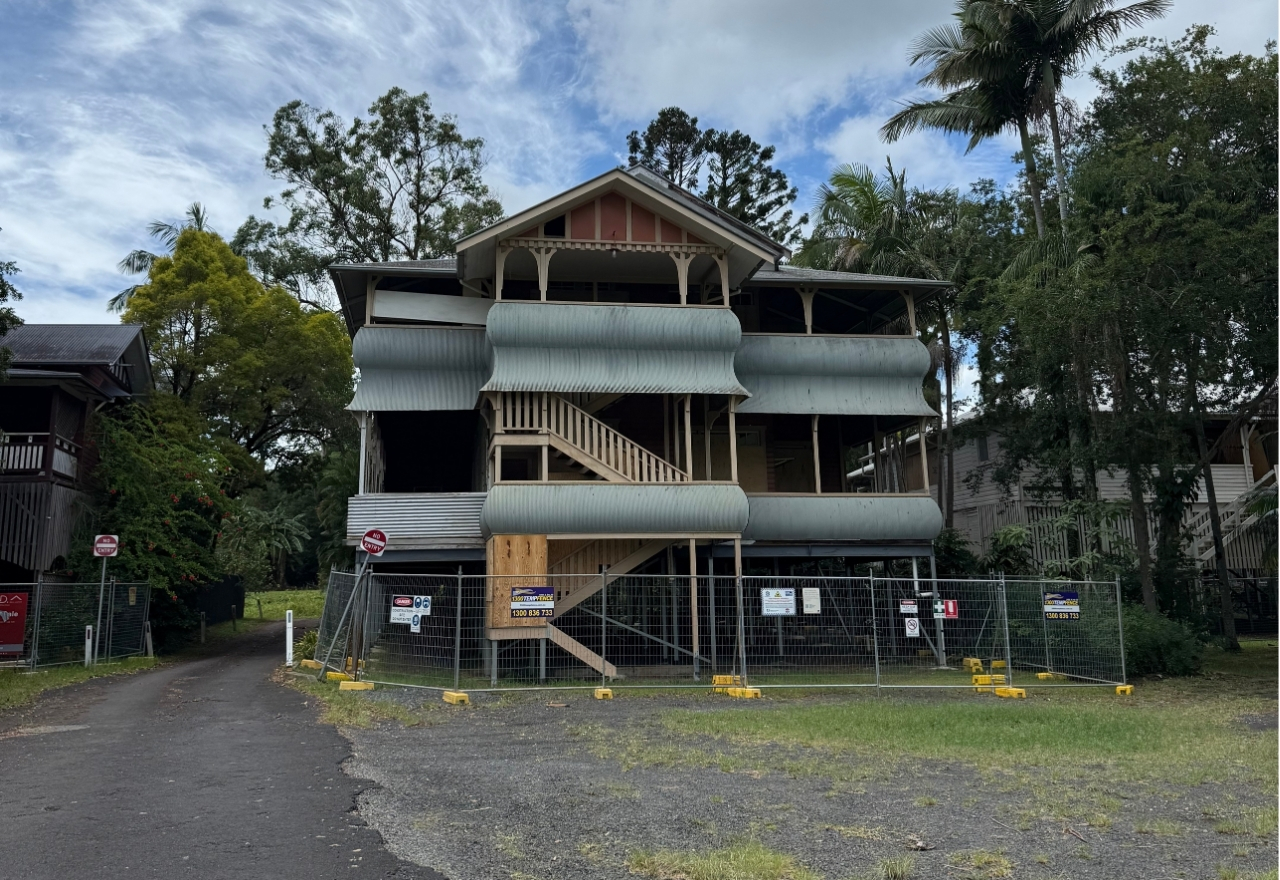
(Gwalia House fenced and boarded up on Coleman Street, Lismore)
After the flood, Ms Evans had the house re-stumped, but says the cumulative toll of flood damage across multiple properties, combined with age and health considerations, made continuing untenable.
“I didn’t want it knocked down,” she said. “That was never what I wanted. I left the French doors and everything there because it would be such a shame to see it all ripped out.”
The property has since been acquired by the NSW Reconstruction Authority (RA) as part of the flood recovery buyback program. In a statement, an RA spokesperson confirmed that no final decision has yet been made about the home’s future.
“The NSW Reconstruction Authority is currently assessing the future use of 7 Coleman St Lismore,” the spokesperson said. “Heritage and conservation considerations form part of this assessment, alongside a range of other factors. Each property is considered on its own merits.”
The RA said its priority is to relocate, reuse or recycle buyback homes wherever possible. When demolition is required, materials are salvaged for reuse or recycling, with more than three quarters of eligible materials from demolished homes recycled to date, excluding asbestos-contaminated material.
130 homes deemed suitable for reuse have so far been offered for sale through expression-of-interest and auction programs, allowing buyers to pursue private relocation. To date, 32 buyback homes have been successfully relocated.
For Ms Evans, the hope remains that Gwalia House’s significance will be recognised in whatever decision is made.
“It was part of a heritage precinct. It was special,” she said. “I just hope whatever happens, they think about the history and what it’s meant to this town.”
Only $4 per month.....
Stand by us and support local journalism and local jobs by unlocking this article and becoming a Premium Content subscriber of the Lismore App for only $4 a month. You will gain unlimited access to all of our membership content.