SUNDAY PROFILE: The Legacy of Ian Weir & Son

Dylan Butcher
06 December 2025, 6:06 PM
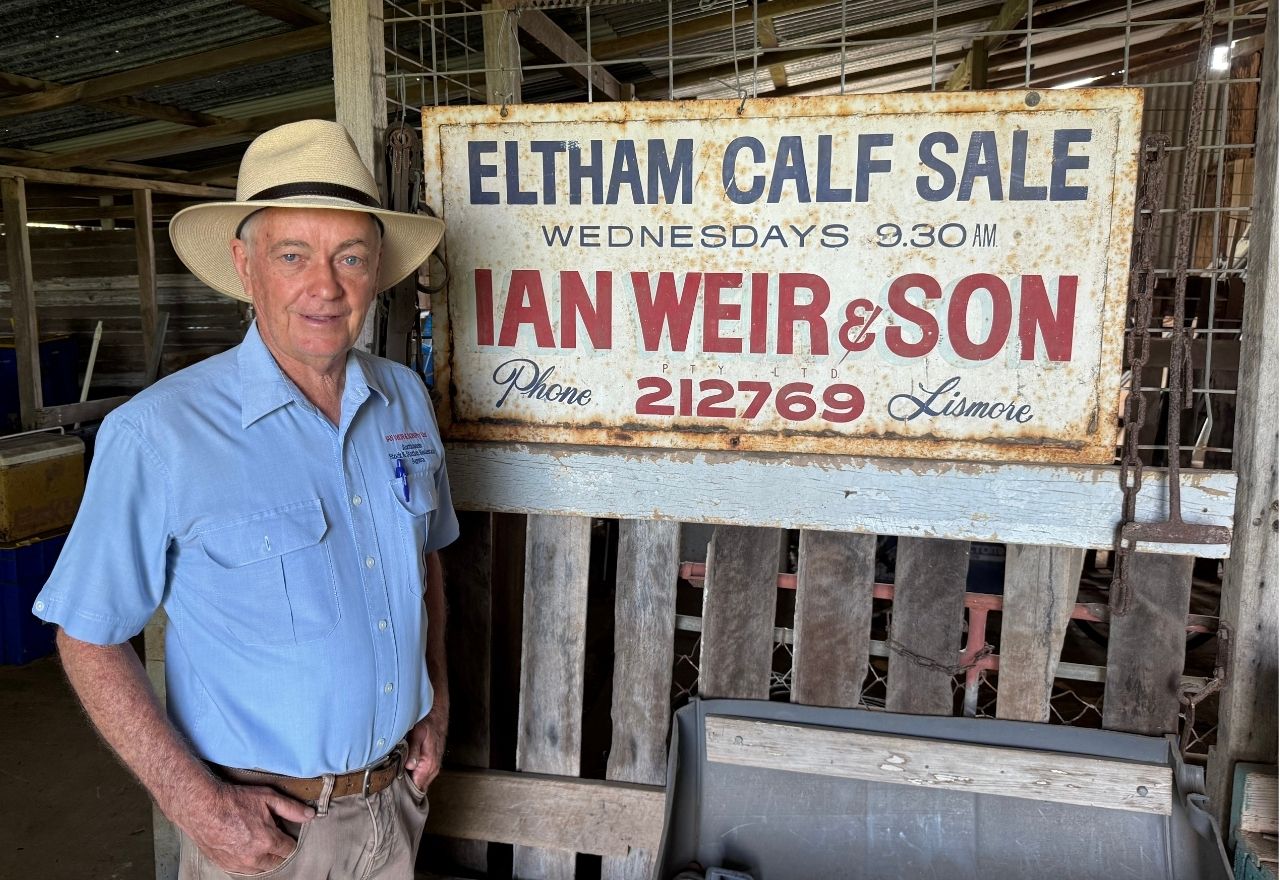 Ian Weir's son, Glenn Weir in front of an original calf sale sign
When the Lismore App sat down with long-time agent Glenn Weir, the conversation moved quickly through decades of local history - from the early days of Keen Street’s poultry auctions to the present-day action of Lismore Saleyards. What emerged was the story of a business woven into the agricultural life of our region, a name that locals know, trust and recognise without ever needing it explained.
The Roots of a Local Legacy
The foundations of Ian Weir & Son Pty Ltd were laid long before the company officially launched in July 1986. Glenn’s connection to the industry stretched back to his school days.
“I worked for Keith McLeay from school. I was 16. I worked there for 10 years,” he said. “So I was 26 in 1986.”
“Dad worked for McLeay too, he started there as a young bloke, same path as me.”
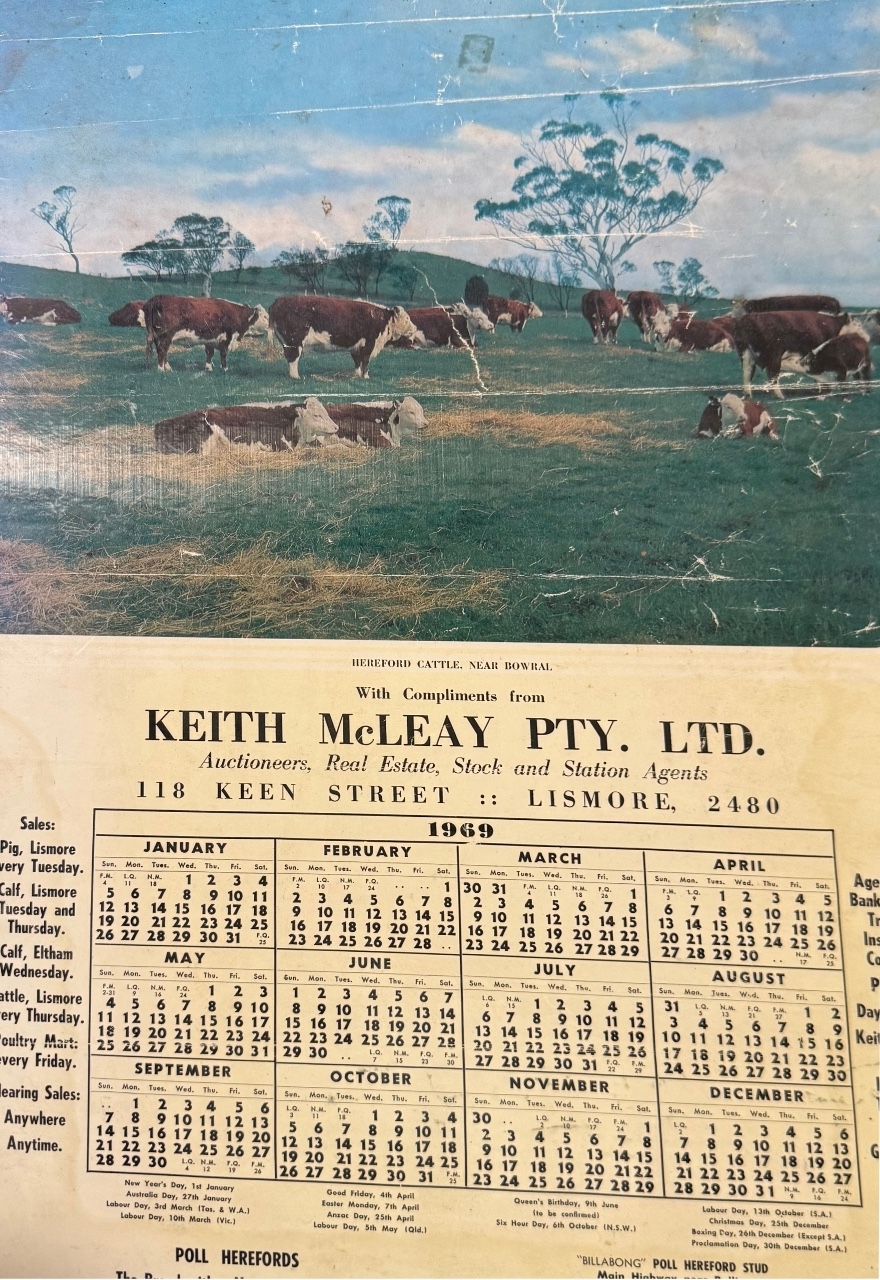
(1969 edition of the iconic Keith McLeay calendars)
“The Keith McLeay business was well known in the Lismore district for cattle sales, poultry auctions, and the now famous monthly furniture and machinery auctions at the Lismore Showground and Alstonville Church Hall.”
“Many people who grew up in the 60s and 70s would remember the cattle market report on 2LM radio of a Saturday morning. The finishing line was always: when consigning your cattle for sale, be sure they are for Keith McLeay.”
When Keith McLeay Pty Ltd was purchased in 1986, a new chapter began. Ian Weir, Glenn, Kevin Cocciola and Neil Short stepped forward as partners under a new name - Ian Weir & Son Pty Ltd.
“Back in 1986, Dad, myself, Kevin and Neil bought what was a long-established business in Keith McLeay Pty Ltd,” Glenn recalled. “That’s when Ian Weir & Son started.”
From its first day, the business reflected the energy of the livestock industry of that era. There were pig and calf sales on Tuesdays, the Eltham calf sale on Wednesdays, and the weekly Lismore cattle sale on Thursdays.
“There wasn’t many Saturdays where we didn’t have an auction of some sort,” Glenn said. “Maybe an estate sale of furniture or a cleaning sale of farm equipment and cattle. No job was too big or too small.
“Auctions were more of a community service than a money-spinner,” he said. “We did it because people needed it done.”
“You didn’t get many Saturdays off back then,” he added. “We sold whatever came through the gate.”

(Kevin Cocciola doing what he does best at Lismore Saleyards - on the microphone!)
“You rode out the tough times and made up for it in the good ones,” Glenn said.
“Neil was also kept busy selling real estate, and his wife Jenny who is Ian’s daughter always did a great job on the books.”
Expanding a Trusted Name
Growth came quickly. In September 1991, the business expanded through the purchase of Gil Crawford & Co, bringing well-known agent Dick Osborne into the team, a member who remains with the firm 30 years later. Another respected salesman, Paul Armour, helped drive the real estate side for almost two decades.
Further growth followed in November 2003, when the company purchased another rival agency, Walker Gordon, which had operated for more than 75 years.
“That was a big step,” Glenn said. “You don’t buy a business like that lightly. It gave us more presence, more people, and more strength.”
Ian Weir was tragically killed in a car accident in 2009, leaving Glenn, Kevin and Neil to run the business. Over time, the next generation began stepping in.
“Mark Noble, Luke Allen and Mitch Dundas have since joined the team, bringing youth to our business and complementing the many years of experience held by the founders,” Glenn said.
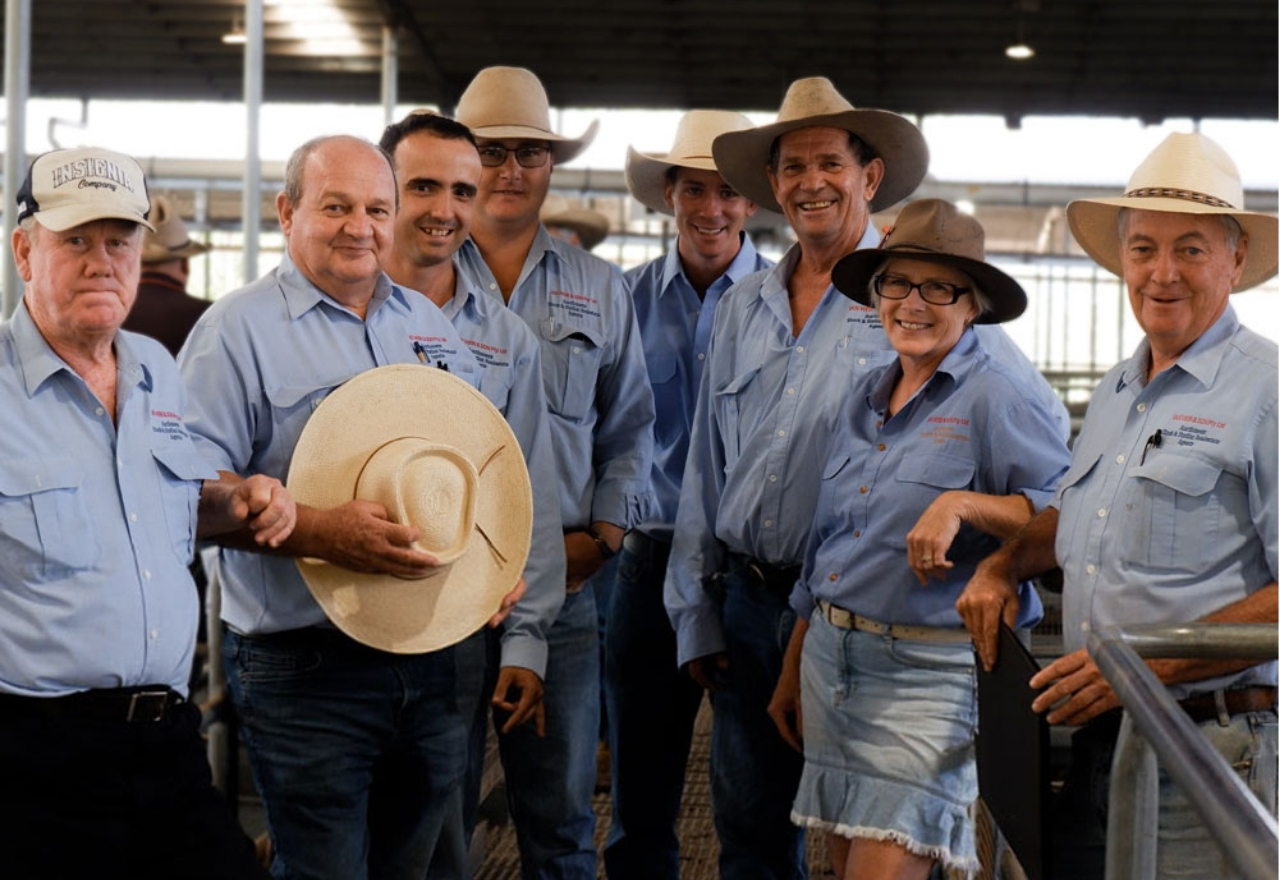
(More recent photo of the team from Ian Weir & Son)
“It’s good to see young fellas coming through - you need them if you want the name to live on.”
“Looking back after almost 50 years in the agency industry it’s pleasing to see many of our clients are still with us albeit this may be the second and third generation we are acting for.”
An Industry in Transition
Part of the significance of the Ian Weir & Son story lies in its longevity through major agricultural change. Glenn saw it firsthand.
“When I started in 1976, there were seven livestock agencies in Lismore,” he said. “Now there is only one.”
The 1960s and 70s were built on mixed farming, cream to the factory, skim milk to the pigs, vegetables, fruit, cattle. Farms were diverse and busy. Macadamias surged in the 70s. Tea tree expanded.
“You only have to drive around the local district now to see a lot more horticulture. Macadamia nuts, sugar cane, soya beans, tea tree, as well as houses, and a lot of country now under bush and weeds.”
Sale days were community days. Farmers dropped their wives in town, watched cattle sell, then met back at the truck. It was rhythm, routine, and a weekly reunion of faces.
“Back in the early 70s, Lismore was the big hub, before the Square was built,” Glenn said. “People would come from Ballina, Bangalow, Mullumbimby to shop here.”
“The introduction of liveweight selling when scales were put in place in 1981 took a lot of the guesswork out of cattle buying,” Glenn said. “Farmers got paid for what the cattle weighed. It was a fairer system.”
“Computers, love them or hate them, changed how business operates.”
Through all change, the business continued to sell 15,000 to 20,000 cattle annually.
“You don’t keep numbers like that without doing something right,” he said.
From 1991 onward, the business operated from Woodlark Street, flooded only twice: 2017 and 2022. The 2022 flood closed the saleyards for 14 months.
“Producers could send their cattle to Casino, but the question was always asked: ‘When are Lismore saleyards reopening?’” Glenn said.
When they returned, it wasn’t just transactions resuming, it was a heartbeat.
“It was good to hear cattle through the ring again,” Glenn said. “Good to see people leaning on the rails. It felt like things were moving again.”
A New Era With a Familiar Name
After nearly forty years, the business has now entered its next chapter through its sale to George & Fuhrmann.
“It was yes one day and no the next,” Glenn said. “It took us months. But Dad always said you never knock back a good offer, because you never know when the next one might come along.”
What mattered most was the people behind the name.
“We wouldn’t have considered selling if they weren’t going to employ our young blokes or keep the team together,” Glenn said. “They told us everything would stay the same, that was very important.”
“The saleyards are known as Ian Weir & Son Lismore Saleyards. That will remain,” he said.
“We’ll operate as George & Fuhrmann incorporating Ian Weir. People can identify with that name. It still means something.”
From its modest launch in 1986 to its expansions in 1991 and 2003, through changing markets, floods, growth and the passing of generations, Ian Weir & Son has remained a constant in the Northern Rivers story.
“We’ve seen a lot of changes,” he said. “But we’re still here, and the name’s still here. That means something.”
Thanks for reading...
Stand by us and support local journalism and local jobs by unlocking this article and becoming a Premium Content subscriber of the Lismore App for only $4 a month. You will gain unlimited access to all of our membership content.