St Vincent's reveals ground-breaking robotic surgery

Dylan Butcher
24 February 2026, 9:56 PM
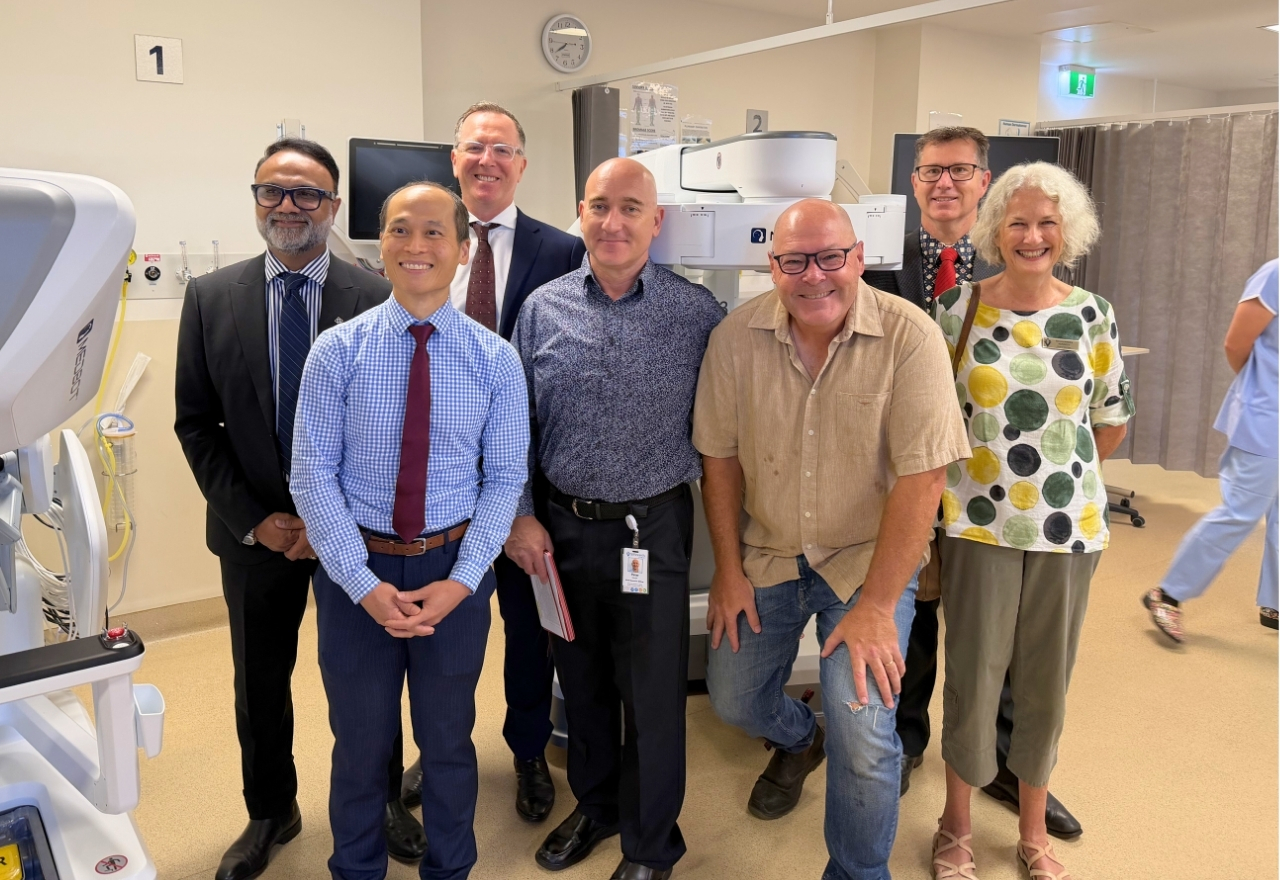 Hospital representatives and Mayor Steve Krieg at the launch of the robot this morning
St Vincent’s Private Hospital has officially entered a new era of surgical care, becoming the first regional private hospital in Australia to introduce the Medbot TOUMAI® Surgical Robotic System.
The Medbot TOUMAI® system works by allowing a surgeon to sit at a console beside the operating table and control four robotic arms fitted with tiny surgical instruments. Using a high-definition 3D camera, the surgeon sees inside the body with exceptional clarity, while hand movements are translated into precise, tremor-free motions by the robotic arms.
Unlike traditional keyhole surgery, the instruments have wrist-like joints that can bend and rotate, mimicking the natural movement of the human hand in tight spaces. The result is greater precision, smaller incisions, and the ability to perform complex operations in a minimally invasive way.
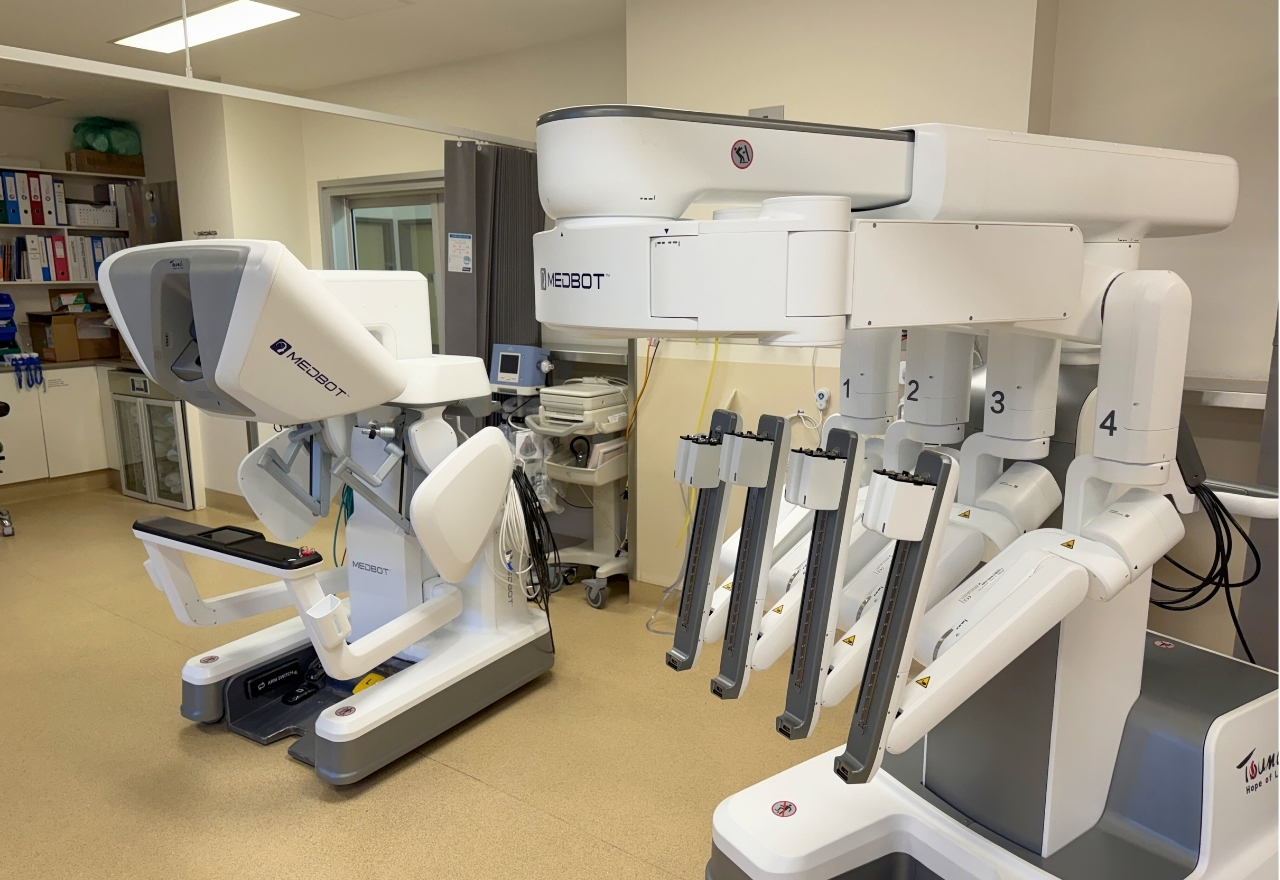
The surgeon sits at the machine on the left of this image, which controls the four arms on the machine on the right of this image.
For the Northern Rivers community, it means complex procedures that once required travel to Brisbane or Sydney can now be performed right here in Lismore.
Hospital Chair Damian Chapelle described the moment as both historic and deeply aligned with the hospital’s long-standing mission.
“Today marks a very special day for healthcare in the region,” he said. “For over a hundred years, St Vincent’s Hospital has been at the cornerstone of healthcare in the Northern Rivers, servicing the community with the best healthcare.”
“For us, it’s about improving with technology and efficiencies, and today is one of those clear directions where we can’t stay still. We need to keep moving with technology.”
Chief Executive Officer Peter Fahey said St Vincent’s had already successfully completed its first robotic procedures and was proud to be leading the way nationally.
“We were the very first with this machine to go live in Australia,” he said. “It’s really fantastic to be the ones that have actually gone live with it, been the ones that trailblaze with it in partnership with the TOUMAI guys.
“We’ve now been able to, with Dr Kenny Low, do three cases successfully, so this is just the start of the program.”
The robotic system will initially support urology, gynaecology and general surgery, including complex pelvic procedures, bowel resections and other major operations traditionally performed through open surgery.
“Being regional, being able to do this is something that is absolutely outstanding,” Mr Fahey said. “What St Vincent’s has been very good at doing is reinvesting back into its community. We’re not about shareholders. We’re about building our community, supporting our community, and having the best care right here.”
Urological surgeon Dr Kenny Low said the arrival of the TOUMAI system represents a genuine turning point for patients across the Northern Rivers.
“This is a major leap forward in surgical care for the Northern Rivers,” he said. “TOUMAI offers the surgeon the ability to do complex major surgery in a keyhole fashion.”
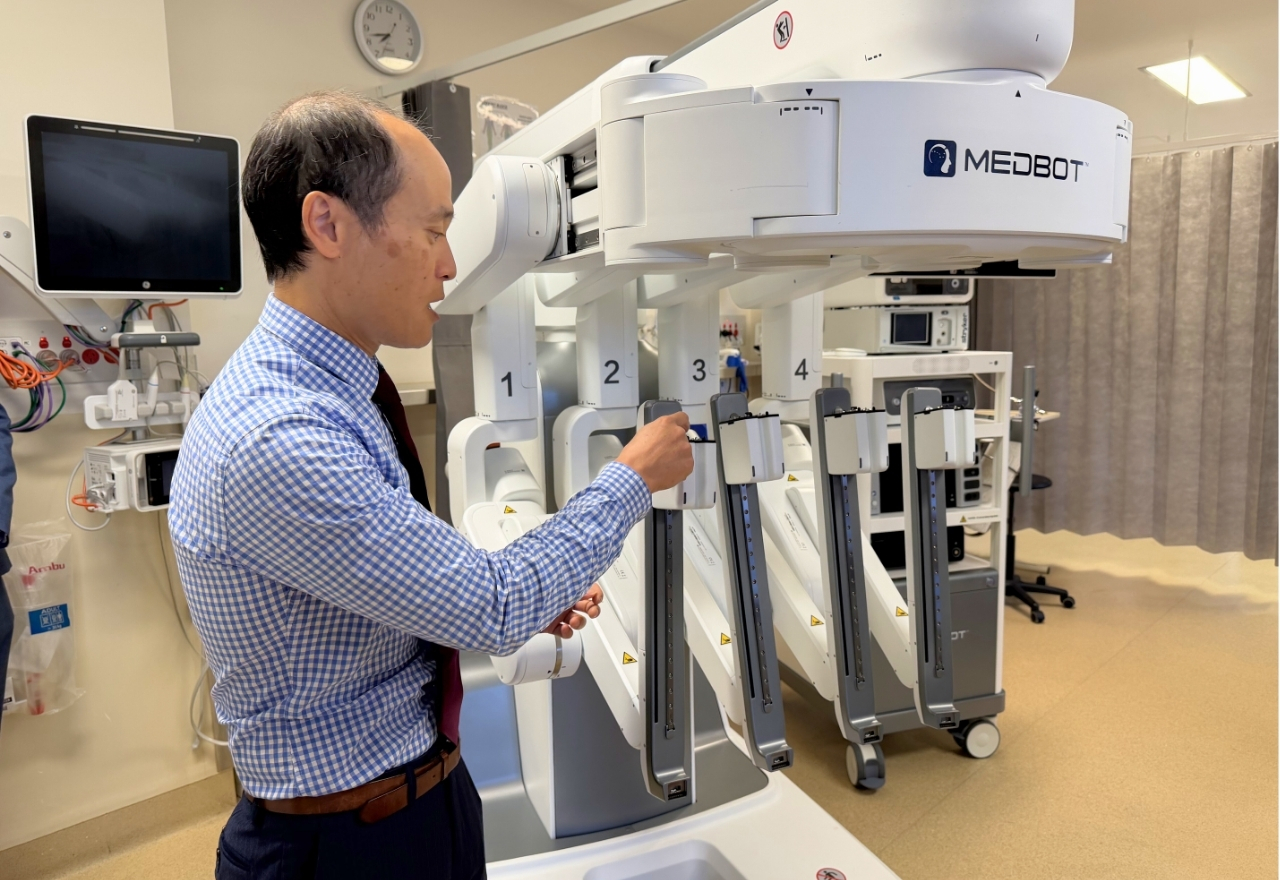
Dr Kenny Low showing off the new robotic machine
Unlike traditional laparoscopic surgery, the robotic system provides high-definition 3D vision, tremor suppression and wristed instruments that mimic the movement of the human hand inside the body, but on a much smaller, more precise scale.
“When you can bend an arm [on the robot], you can get to things without having to cut things that you don’t need to cut,” Dr Low said. “So patients can expect less pain, less bleeding, shorter hospitalisation and likely enhanced recovery if we use the robotic platform.”
He described the technology as a “game changer” for regional healthcare.
“There are very few robotic platforms available in regional areas,” he said. “We’re actually at the forefront of the wave, I think, in the regions. This is a major advance.”
Dr Low said the system would allow surgeons to perform procedures locally that were previously referred out of the area.
“I think what you’ll find is that we’ll be able to do the complex operations that we used to need to send out of areas,” he said. “That’s going to drive our ability to provide holistic surgical care to the community that we weren’t able to do before.”
Aijaz Shaikh, General Manager of MicroPort Matrix Australia, said bringing the technology to Lismore aligns with the company’s global vision of improving access to advanced surgical care.
“Our vision has been to give access to patients who were not able to get that access previously,” he said. “It shouldn’t be a postcode thing. It shouldn’t just be in metropolitan cities, it should be everywhere.”
The system, which took years to develop and commercialise, allows a single surgeon to control robotic arms from a console while a trained surgical team assists at the patient’s side. Mr Shaikh said the focus was not just on technology, but partnership.
“It’s about giving a superior product, being economical, but at the same time making sure we partner with the hospital, with the staff to make sure that they can then pass that on to their patients,” he said.
Beyond patient outcomes, Mr Fahey said the investment would also strengthen Lismore’s ability to attract and retain highly skilled specialists.
“A lot of surgeons, especially the ones in the biggest cities, they want to come to technology,” he said. “What this will bring is new surgeons wanting to come to the whole area.”
He added that robotic procedures typically involve a short hospital stay of one to three nights, ensuring St Vincent’s can continue to provide comprehensive inpatient care while adapting to the changing surgical landscape.
For a regional city that continues to rebuild and reimagine its future, the introduction of robotic surgery is more than a medical milestone. It is yet another announcement that signals confidence in our community.
As Mr Chapelle reflected, the hospital has been serving the region for more than a century. With robotic surgery now part of its operating theatres, St Vincent’s is clearly planning for the next hundred years, and making sure Lismore remains at the heart of advanced healthcare in regional Australia.
Only $4 per month.....
Stand by us and support local journalism and local jobs by unlocking this article and becoming a Premium Content subscriber of the Lismore App for only $4 a month. You will gain unlimited access to all of our membership content.