Saffin says that Nature Based Solutions alone cannot lower major flood levels

Simon Mumford
18 January 2026, 6:33 PM
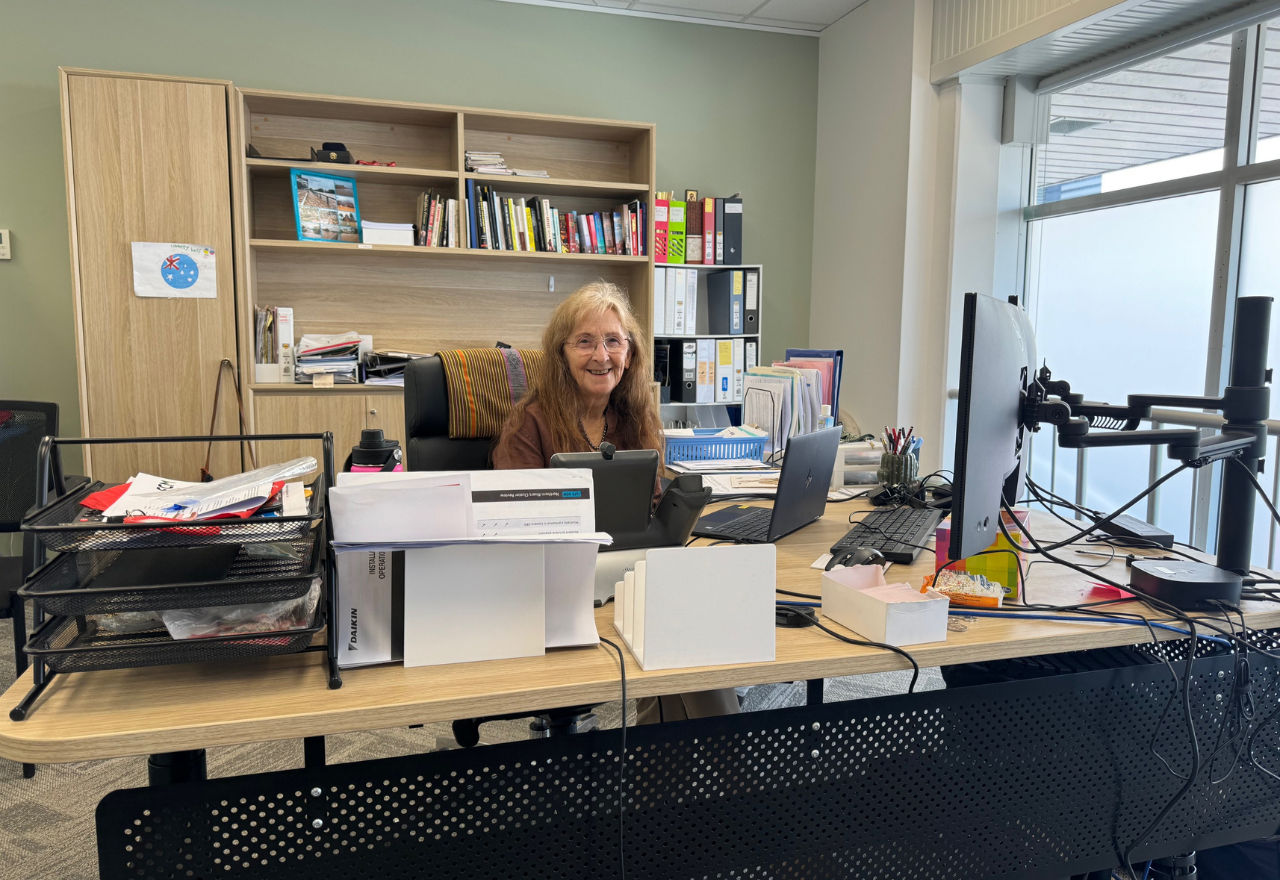 Minister for Recovery Janelle Saffin at her desk in Lismore
Flood mitigation will be the hot topic of conversation from June 30 this year. That is when the CSIRO is due to release its Richmond River Catchment results after running two bundles with six scenarios in each bundle, replicating three floods: 2008 (which affected the Richmond River towns of Kyogle and Casino), 2017 and 2022.
As the CSIRO high-performance computers whirl away, Minister for Recovery Janelle Saffin has been performing a deep dive on another flood mitigation option, Nature-Based Solutions. The Lismore App sat down and recorded a Talking Lismore podcast to discover her learnings.
Ms Saffin began by saying the community has two distinct views, with no middle ground. You are either in the grey camp - man-made - or the green camp - nature-based.
"It seems like both groups have them put up as their holy grail," Ms Saffin said. "And I say it's not either. Nature-based has been around forever. It's not new, and in fact, some of the principles of it inform the grey engineering, because it is about engineering.
"Ultimately, it's about engineering, understanding the hydrology of the river, and what slows that water flow down.
Ms Saffin's deep dive, included a visit to the Australian National University in Canberra, with her team and the staff from the NSW Reconstruction Authority. She also read a paper called Nature-Based Solutions that was written by scientific leaders in the flood mitigation field with a focus on mitigating riverine flooding. The authors included Prabhari Herath, Roslyn Prinsely, Barry Croke, Carmel Pollino and Jai Vaze, a familiar name to Lismore and the Northern Rivers residents.
"These are all very highly skilled, capable people. They're academics, so research-based. Whatever they do and promote has a research basis to it. So, I thought that was important to have the conversation at that level with them.
"Riverine flooding, and they say it here, is the most destructive natural hazard globally. It leads to economic losses, poses serious threats to lives and infrastructure, and nature-based solutions have emerged, not just here but elsewhere, as sustainable alternatives to what we call conventional flood management.
"Nature based can, in a sense, mimic what I call the natural flows of water and diversions and all sorts of things that happen. But again, there has to be some science to it. You don't go, oh, it's nature-based, and I'll plant 1000 trees and let them bloom and see what happens. But we know that we can plant trees, certain trees, in certain areas, and they can help slow down that water a little bit. It can hold water back.
"This document that I just referred to, it was a systematic review and analysis of 141 academic and seven grey literature documents to assess the effectiveness of nature-based solutions globally and in Australia, of course. So, it looked at it for flood mitigation at catchment scale.
"What they came up with was that nature based strategies for flood mitigation operate through three fundamental strategies. Detaining floods, so some sort of detention that's temporarily or permanently storing excess water, wetlands, forests, leaky weirs, like North Ipswich, which we'll come to.
"The second one was reducing flood energy. That's slowing water movement by increasing surface roughness and infiltration, afforestation, riparian vegetation, diverting flood water, altering flow routes to protect vulnerable areas, bypass channels, paleochannels, like Moree.
"The other thing they did was a categorisation of the nature-based interventions into four main categories, and the four are managing catchment land cover - that's forests, grasslands, agricultural practices, land use, land cover, surface permeability.
"Storing excess water - wetlands, offline and online water retention measures and wetlands, I call wetlands the lungs, they're the lungs, and they breed fish, and they do all sorts of things. We had quite a bit of wetland restoration in Ballina. I got money for it years ago, up and down the East Coast
"Managing the floodplain - stream channel management, riparian vegetation, floodplain reconnection.
"Alternative routes - comes back to the bypass channels, paleochannels, etc.
"So, really, combined and hybrid approaches, that's the nature-based solutions, conventional infrastructure, they show enhanced flood mitigation potential. So not either or.
"When I look worldwide, and I have had a look myself at different projects, one in Italy, some in India, I mean, I've looked at various ones where they do use both."
Ms Saffin is very sure that nature-based solutions on their own can not solve our flood mitigation issues.
"No. That is the evidence to date. I'm talking about evidence, not my view or my belief. There are limitations and considerations, and this analysis lets us know that effectiveness diminishes during extreme flood events. Benefits observed in small catchments may not scale to larger basins. Vegetation-based interventions require maturation periods, and there's knowledge gaps as well.
"Studies show that nature-based can reduce the stormwater runoff by 30% to 75% in urban contexts, and significantly lower flood peaks in rural catchments. But, they work best for low to moderate flood events, as part of integrated flood management, not standalone solutions.
"That's what I keep reading everywhere."
For those who have the time and are inclined, you can read the full Nature-Based Solutions document by clicking on the link.
Post June 30, our community will start its most important discussion about how to minimise flood heights in the Richmond River Catchment, if the modelling shows it can be achieved. Of course, it may show that nothing can be achieved.
"Often, when we have debates and discussions in Lismore, we do get a bit stuck. And I think it's more ideologically stuck, or what I call the holy grails, that things are held up as sort of holy grails, and it's like, okay, let's just be quite practical about this. CSIRO have been really clear. What they're looking at is what can help and not harm.
"We've got to not mock each other on what we think will work. Let's have mature conversations about it, and just look at the evidence and engage in that discussion and that debate, because, particularly those of us in leadership, because we've got to lead in our community, so it behoves us to be as informed as we can be."
To listen to the full 20-minute podcast, click on the Talking Lismore podcast link.
Only $4 per month.....
Stand by us and support local journalism and local jobs by unlocking this article and becoming a Premium Content subscriber of the Lismore App for only $4 a month. You will gain unlimited access to all of our membership content.