PACER and SPOT: How will they make a difference to CBD safety?

Simon Mumford
22 February 2026, 6:42 PM
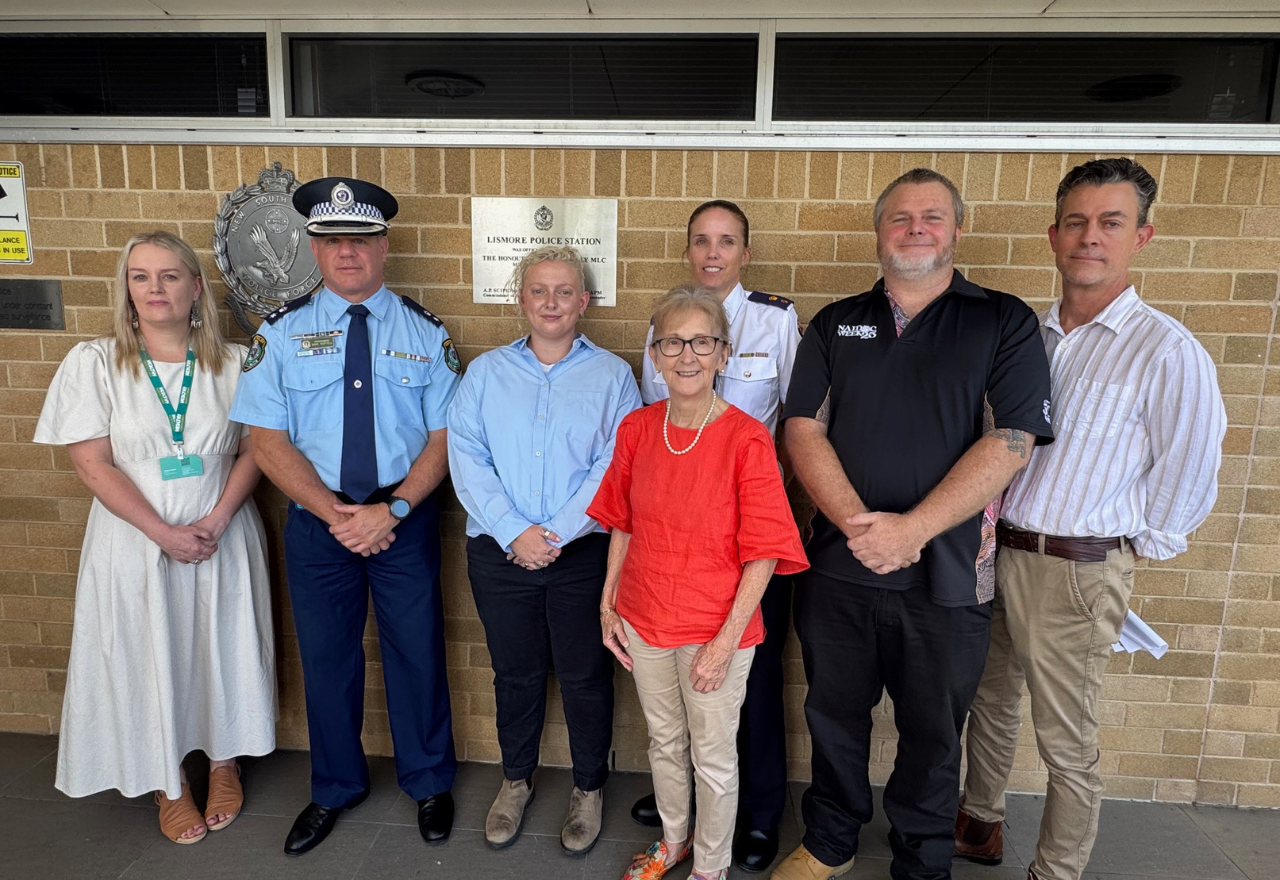 Aimee McNeill, Director Integrated Community Wellbeing, Healthy North Coast,Superintendent Dave Roptell, Commander Richmond Police District, Annabella Bontschek, Clinical Nurse Consultant, PACER, NNSWLHD, Member for Lismore Janelle Saffin, NSW Ambulance Area Zone Manager Superintendent Katherine McAnelly, Timothy Dilli, Clinical Nurse Consultant, SPOT lead, NNSWLHD and Trent Taylor, Strategic Partnerships and Innovation manager, MHAOD, NNSWLHD at the Lismore Police Station
After Friday's announcement introducing the new PACER (Police Ambulance and Clinical Early Response) person, Anabella Bontschek and the new SPOT (Suicide Prevention Outreach Team) lead, Timothy Dilli, the Lismore App dug a little deeper into each role and what effect it will have on the people involved and the community.
Overall, the PACER program leads to safer outcomes for the community, with a proven track record of early de-escalation of emergency situations and a reduction in avoidable ED presentations.
On Friday, it was announced that communication was a critical component of each program's success. So, police, ambulance, and all the elements of Northern NSW Local Health District (NNSWLHD), such as mental health, alcohol and other drugs, need to work closely and communicate effectively to achieve the best outcomes.
The first step is usually a phone call to Lismore Police Station on Zadoc Street or to NSW Ambulance.
Depending on the situation, a team is sent to the site to assess whether it is a criminal, medical, or potential mental health concern.
If it is mental health, Anabella Bontschek, the Clinical Nurse Consultant, PACER at NNSWLHD, triages the situation using a process that has been formulated with NSW Health.
"Then, we will go out on scene to assess that person. I'm a clinical nurse consultant, so I've worked in public health in Victoria since 2019 in acute mental health, and I have worked PACER in Victoria for the last four years as well. So, I bring that knowledge up here, and I'm hoping to really embed what I've learned down there in the service up here.
"When I go out there, I will be assessing their mental state then and there, looking at the risks that they're presenting with to themselves or to the community, and focusing on what services I could refer them to in the community mental health sector.
"I'll be working very closely with our acute care service as well, which is based out of community mental health at Lismore Base Hospital. And I'm sure that a lot of referrals from PACER will be linked with that service or our SPOT program, if that's necessary.
"It's about linking people with the correct health services ongoing to reduce the amount of distress and crisis that they are presenting within the community, and assessing those risks of whether we can treat someone safely in the community, or if we do need to bring them into hospital."
As you would expect, drugs do play a role in someone's mental health.
"I think that substance use disorders do affect mental health conditions at times. And it is definitely a dual sort of diagnosis sector where we deal with people who are experiencing substance use disorder and mental illness. I think that we have got some really amazing programs at Lismore Base Hospital for drug and alcohol dependence, and those are services that we'll also be referring to as needed," Anaballa said.
SPOT is another critical program in the mental health process. SPOT is an acronym for Suicide Prevention Outreach Team, and is led by Timothy Dilli.
SPOT is focused on building engagement with people and supporting them to manage suicidal distress. It has four staff who have a lived experience of their own suicidal crisis.
"I've got a senior peer worker. I've got an Aboriginal peer worker. They both have a lived experience of suicidality. Clients really enjoy engaging with them. You know, we meet people where they're at, so that could be the option to come into their homes. Some people like to go for a walk in the park or the beach. We're very flexible and open in terms of where that person wants to meet with us.
"We acknowledge a lot of our clients have a history of significant trauma, so we like to engage very slowly and gently, acknowledging that the client is the lead of their care and we're there to support them to improve their quality of life and decrease their risk to self.
The SPOT team work in a very integrated fashion with the rest of the health service to link people into the care they need, so they can address the drivers of their suicidality and decrease their risk of completing a suicide.
"It's been very well received since we launched in November of last year. We've supported about 50 persons so far, and the consumers experience of care has been rated very favourable," Tim said.
"I think they are really resonating with the peer-led, trauma-informed approach that we use as a service. I'm really excited to continue to build the program and the reach of the program to support as many local community members as possible."
Tim explained that the majority of their work is through the Mental Health Access Line, but also through presentations at the local emergency department, which is not the best environment for someone who is suicidal due to the noise and the number of people. If you are helping someone get support, he encourages you ask specific questions.
"We would encourage people to identify early, like the evidence suggests, asking explicit and direct questions to people about suicide risk. That doesn't create suicide risk. I think it's breaking down some of those societal stigmas and taboos around having conversations around suicide. Because, just asking the question explicitly, there is no evidence to suggest that would increase somebody's risk of completing a suicide.
"We do a lot of work with carers of people experiencing suicide just to support their capacity to support their loved one through that crisis, and we also do some kind of preventative intervention in terms of a dialectic behavioural therapy skills group, so getting people in a shared adult learning environment to kind of upskill themselves in their interpersonal effectiveness, managing emotional distress.
"We really hope that the program will equip people to better navigate future psychological crisis. And so far, the results of participants coming through those programs is very favourable in terms of decreased need for service utilisation after completing the program."
Trent Taylor, Strategic Partnerships and Innovation Manager, MHAOD (Mental Health Alcohol and Other Drugs), NNSWLHD added, "We know that early intervention and working with people, can prevent unnecessary deaths, and we can keep people alive, and we want to work with the community.
"I attended the Lismore community forum that was put on by council around safety, with Janelle and other members of the police and ambulance, as clearly the community are telling us there is a need, and we want to respond to that. So we're really thankful for this project."
That point was reiterated by Member for Lismore, Janelle Saffin. "I wanted to say that this is an initiative that we've wanted for a long time, that we did commence some time ago, and we're really thankful for Annabella to come and join and bring her skills with us. This initiative really is about working in partnership with the police, with ambulance and also with our Primary Health Network, Healthy North Coast, because ultimately, we want people to get to the right care at the right time, and this allows people at a time of heightened trauma in their life be able to understand the correct pathway for them.
Dave Roptell, Superintendent, Richmond Police District, said his hope is that the perception of crime and safety in the CBD will be reduced.
"I've been here now nearly 12 months, and when I first got here, I was listening to the community and the perception of the community, there was a lot of crime in the Lismore CBD, and the majority had to do with mental health crisis situations. So the perception of crime was in people's minds, believing that there were criminal activities taking place, when, in fact, our data is telling us that it was a lot of mental health episodes.
"I just want to say I've been talking to the police about this initiative, and some of them have been around and seen it before, but the new ones, they're really embracing it, and they're going to take it on board and see the benefits that it will provide for everyone involved."
It will likely be 12 months before we see any data on the impact of the PACER and SPOT programs in Lismore and surrounding areas, but both programs should instil a great deal of confidence in the community that improvements will be made each week in 2026.
Only $4 per month.....
Stand by us and support local journalism and local jobs by unlocking this article and becoming a Premium Content subscriber of the Lismore App for only $4 a month. You will gain unlimited access to all of our membership content.