Jenny Dowell talks about her terminal journey with the end in sight

Simon Mumford
14 February 2026, 5:51 PM
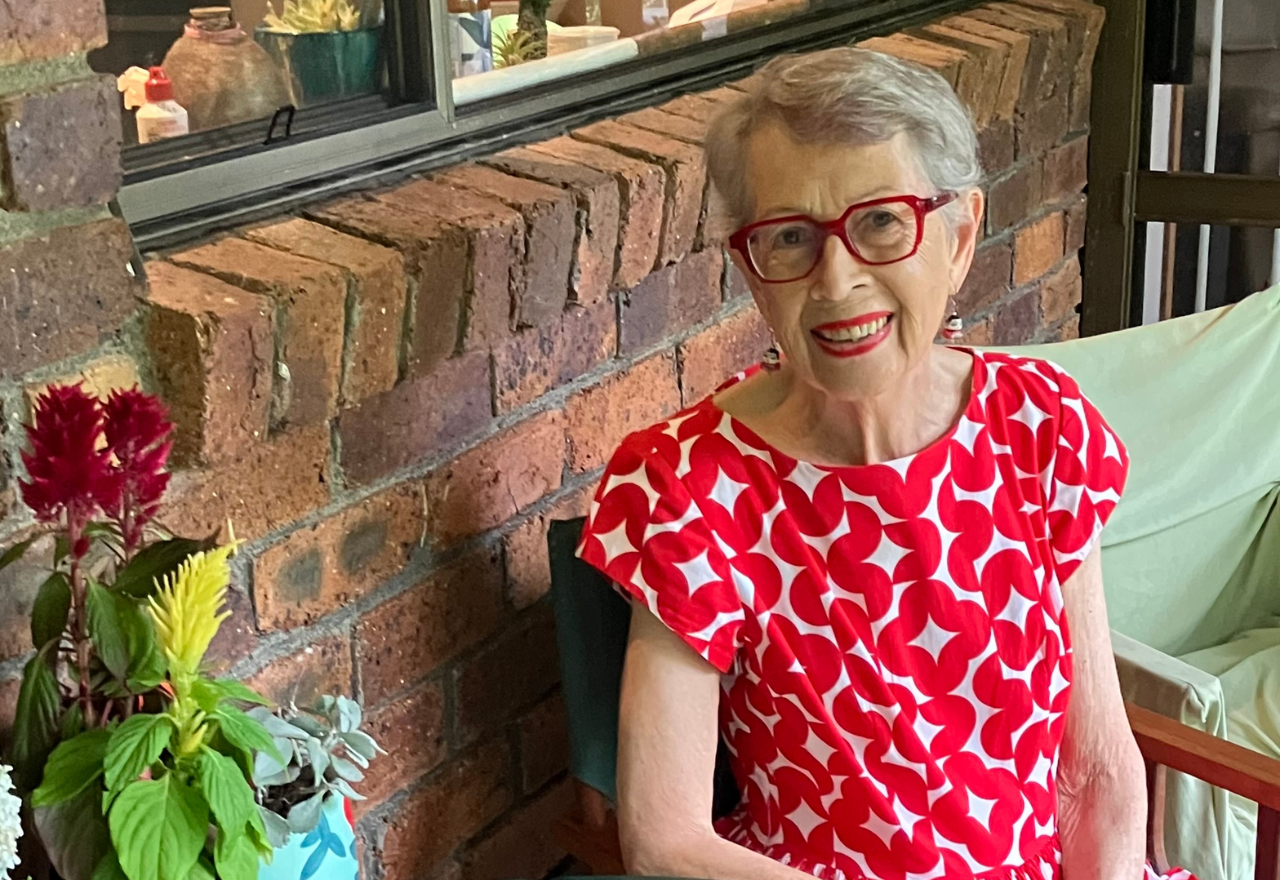 Jenny Dowell at home in Goonellabah. Photo: supplied
If you are on social media, a number of Lismore App readers would know that former Lismore mayor Jenny Dowell is approaching the end of her life.
Last Thursday, I sat down with Jenny on the veranda in her Goonellabah home overlooking a backyard filled with trees, plants and flowers, to let Jenny tell her story in a Talking Lismore podcast.
In this deeply personal interview, Jenny reflects on her original breast cancer diagnosis four days after becoming the Mayor of Lismore in 2008, to this terminal cancer diagnosis, her decision to pursue voluntary assisted dying (VAD), and the peace she has found in planning the end of her life.
Seventeen years after surviving breast cancer, Jenny believed she was “through this, and cancer had left my body, and for good.” Regular mammograms and blood tests showed nothing. “I had 17 years of blissful ignorance,” she says, unaware that undetectable cells had spread through her spine and pelvis.
Last May, after a seven-day bushwalk in Mount Kaputar, near Narrabri, and another at the Warrumbungle National Park, Jenny helped a friend with an esky, hurting her back. When the pain didn't go away naturally, she saw her doctor, had scans and received the devastating news that she had cancer in her spine and pelvis, and that it was incurable. “It hit me like a ton of bricks," Jenny said.
Initially, Jenny was prescribed a new hormone-blocking treatment related to the original breast cancer, but she struggled with severe side effects.
“Terrible nausea, shocking fatigue, no appetite, I lost lots of weight immediately. I was barely functioning,” she says. “Food tasted awful. I couldn’t stand the smell of cooking.” Faced with limited time—“possibly 12 months, possibly only six”—she chose quality of life over quantity.
“All of a sudden you're going, what sort of life do I want? Weighing up quality versus quantity. And I would always choose quality,” she explains.
A month ago, in January 2026, after inconclusive scan results, Jenny decided to stop treatment. “That’s it. I’m stopping. I just want to have my pain relief.”
Jenny has since applied for VAD under New South Wales legislation. The process requires two independent medical assessments to confirm mental capacity and prognosis. So far, she says, it’s been “tick, tick.” She speaks candidly about the two available pathways—doctor-administered or self-administered medication to end her life—carefully weighing her options.
The doctor-administered medication achieves a quicker result, but the compromise is that you have a doctor in the room, instead of just family. With the self-administered medication, you "have to physically be able to lift it to your mouth and drink it, and swallow". Jenny is leaning towards the latter, but doesn't have to make the final decision yet.
When asked about how Jenny's family is coping with her decision and the journey ahead, she said they have been central to her finding peace. “We’re very open,” she says of her husband Ron and their two adult children. “Nothing’s off limits.” She feels fortunate to have universal support, acknowledging that others can face resistance from loved ones. “I’m lucky. I don’t have that. I have everyone around me.”
Rather than fear, Jenny expresses gratitude. Reflecting on the 17 years between diagnoses, oblivious to her new cancer spreading through her spine and pelvis, she says, “They were the best 17 years of my public life.” At 75, she feels “satisfied… I wouldn’t change anything.”
As Jenny's pain increases, on top of relief medication, she performs daily mindfulness rituals—“five things I can see, four things I can hear, three things I can feel, two things I can smell and one thing I can taste …”—that takes two minutes and leaves her feeling calm and grounded in the present. “I’m not a religious person,” she says, “but I have my moments of reflection and being in the moment.”
Not many people get to plan their own funeral, but Jenny has. She has written her eulogy and gifted treasured belongings. “The luxury of having the opportunity to gift things now… feels good.”
When asked how she wants to be remembered, she answers simply: “That I cared… that I always had time to listen.”
In her closing words, she expresses gratitude to her community: “Lismore is my soul place… You’ve given me my soul place, and I’ve loved every minute of it. So thank you.”
Jenny Dowell's full interview runs over 30 minutes and covers more details and emotions than I can include in this story. Some people will find it confronting, and some will not agree with Jenny's choices, but you have to admire her strength and her willingness to still help people by sharing her end-of-life story.
To listen to the complete chat, click Talking Lismore podcast.
Only $4 per month.....
Stand by us and support local journalism and local jobs by unlocking this article and becoming a Premium Content subscriber of the Lismore App for only $4 a month. You will gain unlimited access to all of our membership content.