Industry pushback as Greens label blueberry farming ‘out of control’

Dylan Butcher
09 February 2026, 6:28 PM

A push by the NSW Greens to introduce tighter regulations on the blueberry industry is being met with concern from growers in the Northern Rivers, who say the campaign risks unfairly targeting farmers and overlooking the sector’s importance to regional jobs, food production and the local economy.
Greens MLC Cate Faehrmann has given notice of a bill aimed at regulating intensive horticulture, with a particular focus on large-scale blueberry farms. The campaign describes the industry as “out of control” and “largely unregulated”, raising concerns about pesticide use, water pollution and environmental damage across the Mid North Coast and Northern Rivers.
But one of the region’s largest blueberry producers, Mountain Blue, says the portrayal does not reflect the reality of modern farming or the level of regulation already in place.
Mountain Blue managing director Andrew Bell says the business is one of the largest private employers in the area, with farms spread across Alstonville, Lindendale, near Casino and Tabulum, as well as a major packing shed based in Lismore.
“We’d have to be one of the largest private employers in the area,” Mr Bell said.
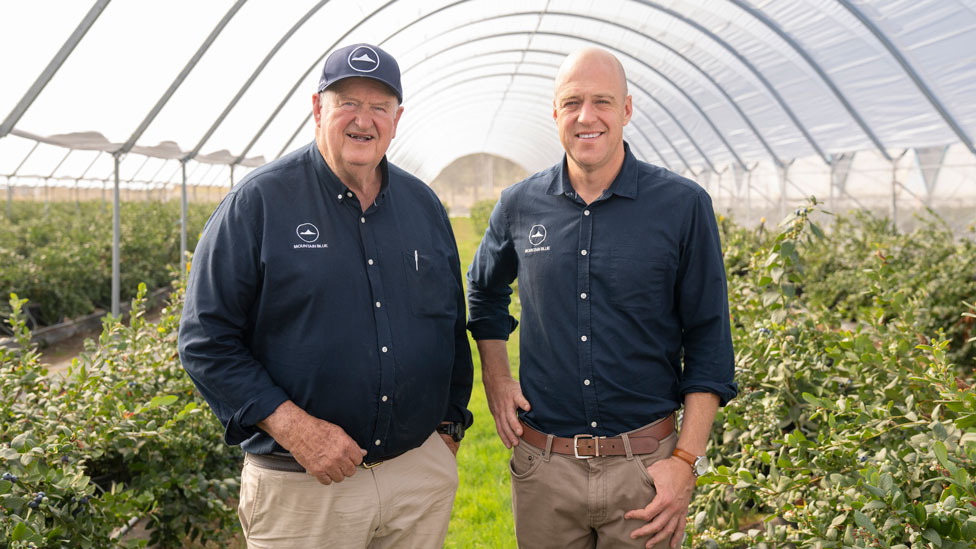
Ridley Bell, founder of Mountain Blue, with his son, managing director Andrew Bell (Image supplied)
That footprint alone represents a significant long-term investment in the Northern Rivers, supporting hundreds of local jobs both directly and indirectly through transport, logistics and supply chains. The Greens’ campaign has used language describing “toxic blueberries”, something Mr Bell says is both disappointing and misleading.
“The toxic thing’s pretty disappointing,” he said. “We eat a lot of berries at home, my kids love them, I take the kids to the farms They’re healthy and they’re safe to eat. We put a lot into it and we want people to experience them in the same way that we do.”
Mr Bell strongly rejected suggestions the industry operates without oversight, saying blueberry farming is already subject to extensive regulation.
“There’s a whole series of regulations and legislation and codes of practice that we comply with,” he said. “We go above and beyond to look after the environment, protect the waterways, capture water and recycle.”
He said environmental management is not an optional extra for growers, but a core part of operating responsibly in rural areas.
The proposed Greens bill would introduce additional planning requirements for intensive horticulture, including mandatory buffer zones and greater scrutiny of farm expansion. While Mr Bell acknowledged the broader challenge of farming alongside growing populations, he said the political framing misses the mark.
“I don’t think it’s unfair. I think it’s misguided,” he said. “We farm in rural areas that are designated as such so people can farm, whether it’s macadamias or blueberries or cattle. That’s what we’re supposed to be doing in these areas.”
Independent economic analysis also highlights the scale and significance of the industry in the region. A Deloitte Access Economics report released late last year found the North Coast produces 87 per cent of Australia’s blueberries, largely due to our region’s extended growing season.
The same report identified agriculture as one of the Northern Rivers’ most important and fastest-growing industries, contributing more than $1.5 billion annually to the regional economy and ranking among the top three sectors in LGAs including Lismore.
As the bill moves through Parliament, blueberry producers are calling for a more balanced conversation, one that reflects the reality of farming on the Northern Rivers, rather than reducing it to political slogans.
Only $4 per month.....
Stand by us and support local journalism and local jobs by unlocking this article and becoming a Premium Content subscriber of the Lismore App for only $4 a month. You will gain unlimited access to all of our membership content.