Collaboration and resilience the key to our future in Lismore & NRs

Simon Mumford
01 December 2025, 7:07 PM
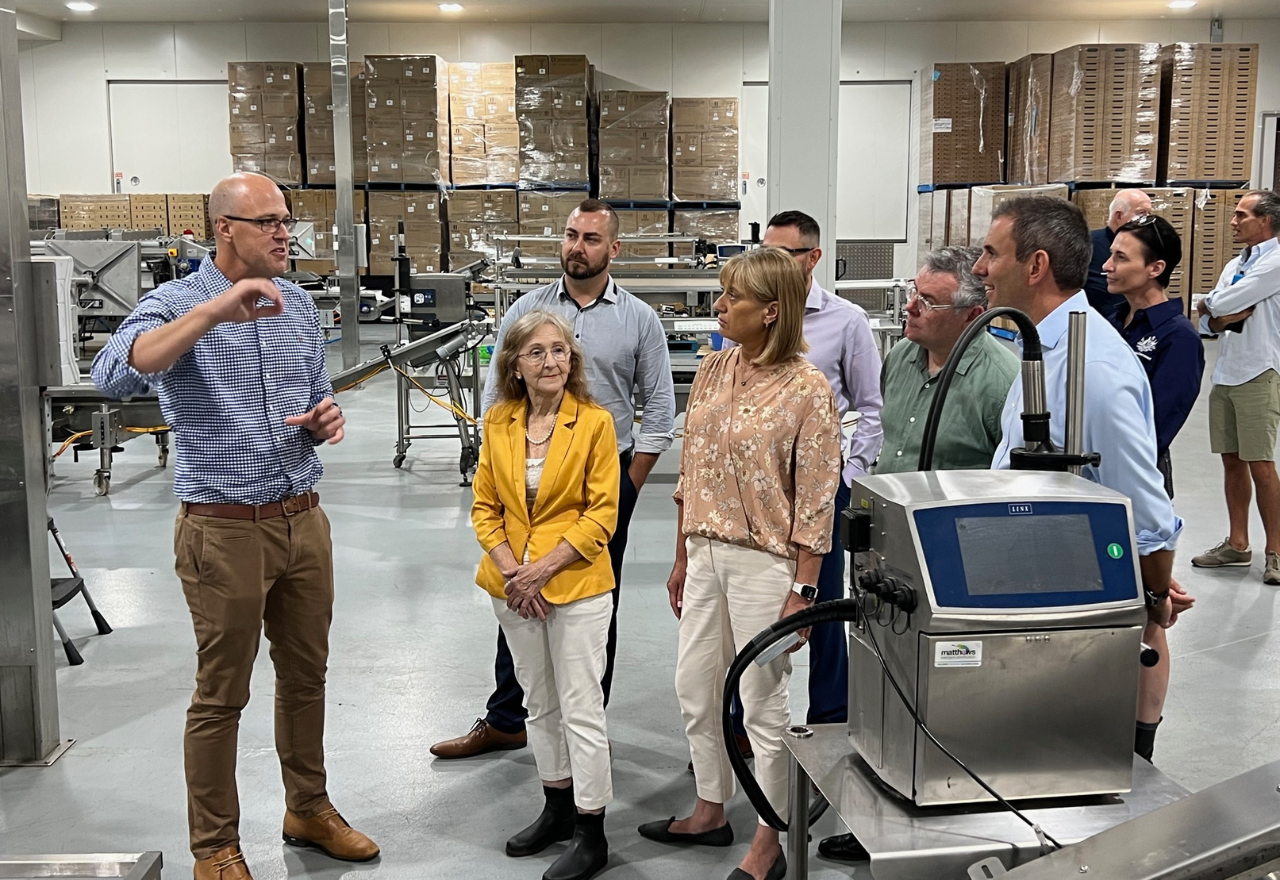 Inside the Mountain Blue packing facility following its reopening in January 2023
Two significant points to come out of yesterday's Northern Rivers Economic Profile and Natural Hazard Impacts Report (yes, we do need to find a way to shorten the name) were collaboration and resilience.
As we know, the governments spent 97% of their disaster funding on recovery and only 3% on preparedness. That is slowly changing, with some reports saying this is now 93% to 7%, while the Colvin report says it could be 87% to 13%. Whichever is correct, there is still a long way to go before we reach close to 50/50, where we spend as much on preparedness as we do on recovery.
Minister for Recovery and Member for Lismore Janelle Saffin said a Climate Council table puts the Federal seat of Richmond (Tweed, Murwillumbah, Mullumbimby, Byron and Ballina) as having the highest number of properties at high risk in the country, that is 31,564 or 28.88%. The Page electorate next door (Lismore, Casino, Kyogle, Woodburn, Grafton) is at Number 5 nationally, with 16.93% or 18,636 properties. One would think that Page's percentage has been reduced due to the Resilient Homes Buyback Program.
While the imbalance in disaster spending shifts slowly, there are many wonderful examples of businesses that are building resilience into their long-term flood plans, as they learn to adapt to a changing climate.
For some in the CBD, it was lining the walls with villaboard, a product known to be more moisture resistant than plasterboard. For two South Lismore businesses, it was taking measures to a whole new level.
The Lismore App revealed in September that Joel Jensen Construction built a new building on Elliot Road on a floating slab to counteract Lismore's famous pug soil, and that the first-floor walls were built with SipForm, a new foam product that is water-resistant, mould-resistant and fire-retardant.
"Basically, the way we've built this, when the water comes through, we'll open up the doors, open up the roller doors at the back, lift out our tables and chairs that we've got. Other than that, everything else is pretty flood-resistant. We'll just let the water go through, have a couple of stubbies, let it go down, hose it out, and play on," Joel said. He estimated his downtime to be a week at most.
On the southern end of South Lismore at the Mountain Blue Packing Facility on Habib Drive, Managing Director Andrew Bell explained their new fish tank resilience measures, which he describes as "completely flood proof".
"It's large panels made out of this sort of carbon fibre product. They're fairly light. We have them stored at the shed.
"We bring them out. They're bolted to the floor. They're reinforced. It takes about a day and a half to put them up. We've practised several times, the team's pretty good at it.
"We take a pretty conservative approach. If we think there's going to be an issue, we throw it up. It's about 16/17 feet high.
"Unfortunately, we can't test the product, but we're fairly confident. We've seen it in person in Florida, where it floods a lot, so we have a fair level of confidence."
Both Joel and Andrew have said that buying and installing flood resilient measures is cheaper than the alternative, which is buying land out of flood in Goonellabah or Alstonville and building new premises.
Taking the cost aside, both men have grown up in the area and want to remain in South Lismore.
"Lismore is part of our family and what we do. And so, if we can, we'd rather not leave. I think it's really important that people do stay and invest in the region.
Another twist in the tail was finding available land, let alone the cost. The new report noted that the lack of suitable industrial land in the Northern Rivers was a barrier to business growth.
The second part of the solution for Lismore and Northern Rivers growth is collaboration. Collaboration between LGAs and businesses.
It has been something that has been attempted before, through the formation of the Northern Rivers Joint Organisation (NRJO), yet we have not seen a regional master plan or any evidence of a cohesive approach to increase the Gross Regional Product.
There is work being done through Business NSW Northern Region with ProspER, which is a business-led initiative to build and unlock the full potential of our region.
Deloitte noted in its report that a coordinated regional land-release and servicing strategy is needed to help deliver infrastructure where it is most needed. That can only be done by local council's working together for a greater good.
Only $4 per month.....
Stand by us and support local journalism and local jobs by unlocking this article and becoming a Premium Content subscriber of the Lismore App for only $4 a month. You will gain unlimited access to all of our membership content.